


PrefaceBack to top
Dear Collegues and Friends,
it is my great honor to cordially invite you to the 2026 Artificial Vision Conference in Aachen, Germany. My colleagues from RWTH Aachen University, from the Research Center in Julich, and from the University Duisburg-Essen and I are looking forward to a very interesting event, bringing together researchers, scientists, and clinicians dedicated to restore vision in blind patients from many disciplines and many countries around the world.
The development, the fabrication, the marketing, and the survival of a functioning visual neuroprosthesis providing useful vision for a blind subject is still a challenge. It is absolutely amazing, that despite all the drawbacks and difficulties, many groups worldwide are still working very hard on smart solutions. In the last years significant progress has been made in understanding the difficulties of earlier implants and improving the concepts. New materials are evaluated and tested, concepts for the integration of a large number of electrodes emerged and were tested, bi-directional systems which can not only stimulate but also record from the target tissue to modulate stimulus paradigms have been designed and are under evaluation. In the same time our understanding of the biological processes underlying degeneration and how they affect electrical stimulation improved. The clinical trial of the PRIMA implant carried out in patients with age-related macular degeneration enlarged the field of indications for neuroprosthetic devices with a lot of chances for the whole field. Machine learning, artificial intelligence, and a further miniaturization of electronic hardware is already influencing the Artificial Vision concepts.
nterdisciplinarity is the basis of successful research and development in our field. The Artificial Vision conference is a truly interdisciplinary conference and it is also a chance for young researchers to connect to others in this community. What’s new in this year: A poster session will be held on Saturday morning, together with a strong coffee. Gislin Dagnelie will give a keynote lecture on Vision Restauration for the blind. The Artificial Vision meeting will be held simultaneously with the Aachen Cornea Conference. That will give us the opportunity to share resources. And, the conference will take place within the iconic hospital building of the University Clinic in Aachen. Be surprised!
I am very much looking forward seeing you in Aachen.
On behalf of the organizing committee,
Cordially yours,
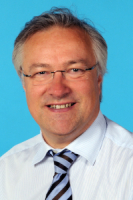
Dr. Peter Walter
Professor of Ophthalmology
RWTH Aachen University
Congress outlineBack to top
The goal of the International Symposium on Visual Prosthetics - Artificial Vision 2026 - is to provide a platform for researchers and clinicians to meet, to present, and to discuss the latest advances and achievements in the field of providing vision with electronic implants to the blind. The symposium will cover all aspects of Artificial Vision such as
- mechanisms of degeneration in the visual system
- principles of electrical stimulation in the visual system
- interfaces to the visual system: electrodes
- stimulation and recording devices: complex implants, systems, algorithms
- preclinical tests: biocompatibility and proof of concept studies
- clinical experiences: patient selection, surgery, and functional outcomes
- patients expectations, rehabilitation aspects
- new ideas and visions
Travel Grants for young researchersBack to top
We especially encourage young researchers to come to the Aachen Meeting and to present your own work and to discuss all aspects of visual prosthetics with colleagues from many different disciplines and countries. To make things easier we will provide travel grants of up to 2,000 EUR for young researchers. Although it is difficult or in other words impossible to define a threshold for being young, a poorly artificial definition and limit has to be set. We feel that usually researchers younger than 40 years of age need more financial support than the older ones. We may be wrong but somehow we need a definition.
To apply for a travel grant please send a CV and a motivation letter to:
pwalter@ukaachen.de
General InformationBack to top
Date |
Friday, December 11th, 2026, 10:30 h - 18:30 h |
||||||||||||||||||||
Venue |
University Hospital Aachen |
||||||||||||||||||||
Online Registration |
Online registration coming soon |
||||||||||||||||||||
Scientific programme |
Prof. Dr. Peter Walter |
||||||||||||||||||||
Organization |
Congress-Organisation Gerling GmbH |
||||||||||||||||||||
Official Language |
English |
||||||||||||||||||||
Hotel Booking |
See hotel on the online registration |
||||||||||||||||||||
|
Attendance Fee
|
*PhD Students and residents must supply a letter of verification as proof of training. The letter has to be sent to the congress organization prior to the meeting. The attendance fee covers the costs for coffee breaks and lunch, Incl. VAT and excl. foreign transfer fees |
||||||||||||||||||||
Payment |
by bank transfer (bank details are quoted on your confirmation and invoice. Please do not transfer money without noting your invoice number!), PayPal or by credit card: VISA, AMERICAN EXPRESS, MASTERCARD |
||||||||||||||||||||
Important notes for participants |
The attendance fee covers the costs for coffee breaks, lunch, and the conference dinner. If you register late or on-site we cannot guarantee for lunch and participation in the social program.
You are encouraged to apply for the meeting either online, by mail or by fax. Changes, errors and misprints excepted. |
CME-POINTSBack to top
The Symposium is certified by the Ärztekammer Nordrhein providing 7 CME-points for each day for the German Continuing Medical Education System.
For the german participants: Bitte geben Sie ihre EF-Nummer bei der Onlineanmledung an, damit wir die Punkte an die Ärztekammer melden können.
An equivalent Certificate of Attendance will be given to you upon on-site registration.
Important dates and informationBack to top
Congress Outline – important dates and information – at a glance
Congress Venue |
University Hospital Aachen, Central Building |
Congress Office |
Gerling Congresse |
Time Schedule – Day 1, 11.12.2026
| Time | Artificial Vision | Aachen Cornea Meeting | |
| 10:00 | Welcome, Come together Seminar Room |
||
| 10:45 | Scientific program, Session 1 Lecture Hall 2 |
||
| 12:00 | Welcome Session Seminar Room |
||
| 12:15 | Scientific program, Session 2 Lecture Hall 2 |
Workshop 1 Room: Konferenzraum |
Workshop 2 Room: "Zahn 7" |
| 13:45 | Lunch Break Seminar Room |
||
| 14:30 | Scientific program, Session 3 Lecture Hall 2 |
Workshop 3.1 Room: 6 |
Workshop 4 Room: Spiegelsaal |
| 16:00 | Coffee and Tea Seminar Room |
||
| 16:30 | Scientific program, Session 4 – Math, AI, Simulation Lecture Hall 2 |
Workshop 3.2 Room: 6 |
Workshop 5 Room: Konferenzraum |
| 19:00 | Conference Dinner Registration necessary! |
||
Time Schedule – Day 2, 12.12.2026
| Time | Artificial Vision | Aachen Cornea Meeting |
| 08:30 | Poster Session Room "Zahn 7" |
Scientific program, Session 1 Changes in corneal supply: Challenges, innovations and perspectives Lecture Hall 6 |
| 10:00 | Keynote Lecture Lecture Hall 4 |
|
| 10:30 | Coffee and Tea Seminar Room |
|
| 11:00 | Scientific program, Session 5 – Clinical Studies Lecture Hall 5 |
Scientific program, Session 2 Translational Eye Banking and Corneal Therapy Lecture Hall 6 |
| 12:30 | Lunch Break Seminar Room |
|
| 13:15 | Award ceremony, Seminar Room AV Travel Awards Scientific Award of the Association of Cornea Banks of North Rhine-Westphalia |
|
| 13:30 | Scientific program, Session 6 – The Future Lecture Hall 5 |
Scientific program, Session 3 Experimental and technological innovations in Eye Banking Lecture Hall 6 |
| 14:45 | Networking, Farewell Seminar Room |
|
| 17:00 | Christmas Market Visit | |
Programme OverviewBack to top
Artificial Vision – the International Symposium on Visual Neuroprosthetics
Day 1 – Friday, December 11th, 2026
10:00 – 10:45 |
Welcome (P. Walter) and Come Together |
10:45 – 12:00 |
Session 1: Degenerations within the visual system |
1.1. 10:45 – 11:00 |
Failure of inhibition explains the paradox of excitation and inhibition as a response to microstimulation in human V1 *Faculty of Mathematics and Physics, Charles University, Prague, Czechia; +Bioengineering Institute, University Miguel Hernández, Elche, Spain |
1.2. 11:00 – 11:15 |
Phase of pathological oscillation influences excitability of retinal ganglion cells in retinitis pigmentosa (RP) mouse model, rd10 1Institute of Biological Information Processing, Forschungszentrum Jülich, Germany; 2Department of Electronic Components and Circuits, University of Duisburg-Essen and Center for Nanointegration Duisburg-Essen, Germany; 3Fraunhofer Institute for Microelectronic Circuits and Systems, Duisburg, Germany |
1.3. 11:15 – 11:30 |
Computational identification of ON- and OFF-like ganglion cell activity in degenerated retina Institute of Biological Information Processing 1 (IBI-1), Forschungszentrum Jülich, Germany |
1.4. 11:30 – 11:45 |
Resting-state electroretinography in RP mouse models and patients Hôpital ophtalmique Jules-Gonin - Fondation Asile des aveugles, Switzerland |
1.5. 11:45 – 12:00 |
Network-mediated subretinal stimulation enables high-acuity vision 1Hansen Experimental Physics Laboratory, 2Department of Ophthalmology, 3Department of Electrical Engineering, Stanford University, CA, USA |
12:00 – 12:15 |
Official Welcome Session |
12:15 – 13:45 |
Session 2: New Concepts |
2.1. 12:15 – 12:30 |
Biocompatible coatings for three-dimensional subretinal prostheses ¹Department of Ophthalmology, ²Hansen Experimental Physics Laboratory, ³Department of Biology, Stanford University; ⁴Department of Ophthalmology, Prince of Songkla University, Thailand; ⁵Department of Materials Science, University of Central Florida, USA; ⁶Department of Physics, University of Strathclyde, Glasgow, UK; ⁷Department of Electrical Engineering, Stanford University, USA |
2.2. 12:30 – 12:45 |
Augmented Broadband Blindsight in Models of Blindness with Tellurium Nanowire Network Prosthesis Institutes of Brain Science, Fudan University, PR of China |
2.3. 12:45 – 13:00 |
Development of PFA-Based Electrode Platforms Toward High-Resolution Neural Interfaces Seoul National University Hospital, Seoul National University, South Korea |
2.4. 13:00 – 13:15 |
Simulation-Guided Thermo-Mechanical Design of PFA-Based Serpentine Interconnects for Retinal Prostheses Seoul National University Hospital, Seoul National University, South Korea |
2.5. 13:15 – 13:30 |
Fabrication of Biocompatible 3D Electrodes for High-resolution Subretinal Prostheses 1Inst. of Photonics, University of Strathclyde, Glasgow, UK; 2Dept. of Material Science, University of Central Florida, Orlando, FL, USA; 3Dept. of Ophthalmology, Stanford University, Stanford, CA, USA; 4Hansen Experimental Physics Laboratory, Stanford University, Stanford, CA, USA; 5Dept. of Electrical Engineering, Stanford University, Stanford, CA, USA |
2.6. 13:30 – 13:45 |
Near-Infrared Organic Photovoltaic Electrodes for Subretinal Neurostimulation 1Institute of Biomedical Electronics, TU Wien, Vienna 1040, Austria; 2Institute for Physical Chemistry (IPC) & Linz Institute for Organic Solar Cells (LIOS), Johannes Kepler University, Linz 4040, Austria; 3Center for Surface- and Nanoanalytics (ZONA), Johannes Kepler University, Linz 4040, Austria; 4Research Group Cellular and Molecular Ophthalmology, University Clinic for Ophthalmology and Optometry, Medical Faculty, Johannes Kepler University Linz, Linz 4040, Austria |
13:45 – 14:30 |
Lunch Break with Sponsors |
14:30 – 16:00 |
Session 3: Systems Integration and Preclinical Studies |
3.1. 14:30 – 14:45 |
Development and Evaluation of an Episcleral Stimulation Device for Electrically Evoked Potential Experiments in Rabbits 1Strategic Initiative for Research and Innovation, Nara Institute of Science and Technology, Nara, Japan; 2NIDEK CO., LTD., Aichi, Japan; 3Department of Ophthalmology, The University of Osaka Graduate School of Medicine, Osaka, Japan |
3.2. 14:45 – 15:00 |
Three-Dimensional PFA Subretinal Electrodes Enhance Ex Vivo Retinal Recruitment Seoul National University Hospital, Seoul National University, Ewha Womans University, South Korea |
3.3. 15:00 – 15:15 |
Advances in COC-Based Retinal Electrodes: Fabrication Optimization and Via-Less 3D Integration 1Department of Electrical and Computer Engineering, Seoul National University (ROK); 2Biomedical Research Institute, Seoul National University Hospital (ROK), South Korea |
3.4. 15:15 – 15:30 |
Fabrication Strategy for Three-Dimensional COC-Based Neural Interfaces with Chip Integration 1Department of Electrical and Computer Engineering, Seoul National University (ROK); 2Biomedical Research Institute, Seoul National University Hospital (ROK), South Korea |
3.5. 15:30 – 15:45 |
Direct Au Bump-to-Bump Thermosonic Bonding on Fully Elastomeric PDMS Substrates for Implantable Devices 1R&D Div., Nidek Co., Ltd., Aichi, Japan; 2Strategic Initiative for Research and Innovation, Nara Institute of Science and Technology, Nara, Japan; 3Department of Ophthalmology, The University of Osaka Graduate School of Medicine, Osaka, Japan |
16:00 – 16:30 |
Coffee / Tea Break with Sponsors |
16:30 – 18:00 |
Session 4: Math, AI, and Simulation for Neuroprosthetics |
4.1. 16:30 – 16:45 |
Mathematical Image Descriptors as Predictors of Human Preference: Implications for Artificial Vision Department of Psychology and Social Sciences, Ambis University; Faculty of Informatics, Masaryk University |
4.2. 16:45 – 17:00 |
Sparse retinal video encoding with warm starts and online linearization 1Chair of Imaging and Computer Vision, RWTH Aachen University, Germany; 2Department of Ophthalmology, RWTH Aachen University, Germany; 3Faculty of Mathematics and Natural Sciences, Heinrich Heine University Düsseldorf, Germany |
4.3. 17:00 – 17:15 |
Simulating the response to epiretinal stimulation of a fully reconstructed patch of mouse retina 1Institute of Biomedical Electronics, TU Wien, Vienna, Austria; 2See https://eyewire.ai/consortium for a list of all consortium members and partner labs |
4.4. 17:15 – 17:30 |
Residual stimulation adaptation improves simulated percept fidelity after electrode failure Murdoch University, Perth, Australia, Kentech Korea |
4.5. 17:30 – 17:45 |
Smart Navigation for Visual Prostheses in Virtual Reality: An End-to-End Framework for Priority-Based Scene Translation and Path Guidance 1Department of Biomedical Engineering and Systems, Faculty of Engineering, Cairo University, Giza, Egypt; 2School of Information Technology, New Giza University, Giza, Egypt |
4.6. 17:45 – 18:00 |
Digital twins of retinal ganglion cell populations for closed-loop epiretinal stimulation Stanford University, UC Santa Cruz, USA |
19:00 |
Conference Dinner |
Day 2 – Saturday, December 12th, 2026
08:30 – 10:00 |
Poster Session "Early but with a coffee" |
P1 |
Electroporation-based delivery of neuroprotective genes into degenerating retinas in the rd10 mouse model of RP Department of Ophthalmology, University Hospital RWTH Aachen, Germany |
P2 |
MEA-Based Non-Viral Delivery of Neuroprotective Genes as Extended Approach to Treat Retinitis Pigmentosa ¹Klinik für Augenheilkunde, Experimentelle Ophthalmologie, Uniklinik RWTH Aachen, Deutschland; ²Institut für Werkstoffe der Elektrotechnik, RWTH Aachen University, Deutschland |
P3 |
Multimodal Imaging of the Visual Cortex in Retinal Degenerated Rats ¹Institute of Neuroscience and Medicine (INM-4), Forschungszentrum Jülich; ²Department of Neurology, RWTH Aachen University Hospital; ³Department of Nuclear Medicine, RWTH Aachen University Hospital |
P4 |
Embedded Phase Detection Algorithm in Local Field Potentials from Retinal Recordings 1University Duisburg-Essen, Electronic Components and Circuits, Duisburg, Germany; 2Forschungszentrum Jülich, Biological Information Processing, Jülich, Germany; 3University Duisburg-Essen, Intelligent Embedded Systems Lab, Duisburg, Germany; 4Fraunhofer Institute for Microelectronic Circuits and Systems, Duisburg, Germany |
P5 |
Top-Side Flexible MEA for Long-Term Brain-Slice Recording 1Institute of Materials in Electrical Engineering, RWTH Aachen University, Germany; 2Department of Epileptology, University Hospital RWTH Aachen University, Aachen, Germany |
P6 |
A Bio-Electronic Hybrid Solid–Liquid Pixelated Color Image Sensor Array as a Direct-to-Display Artificial Retina Emulator Tor Vergata University of Rome, Italy |
P7 |
State of Art in Vitreoretinal Robotic Surgery and Robotic Surgery Option for Intraocular Artificial Vision Implants Private Office of Ophthalmology |
P8 |
Design, fabrication, and surgical feasibility of an epiretinal microelectrode array for implantation into the rat eye ¹Department of Ophthalmology, University Hospital RWTH Aachen; ²Institute of Materials in Electrical Engineering 1 (IWE1), RWTH Aachen University, Germany |
10:00 – 10:30 |
Keynote lecture |
10:30 – 11:00 |
Coffee / Tea with Sponsors |
11:00 – 12:30 |
Session 5: Clinical Studies |
5.1. 11:00 – 11:15 |
Adaptation to Artificial Vision 1Univ. of Athens, Greece; 2Panteion Univ., Athens, Greece; 3Massachusetts General Hospital, Boston, USA; 4Harvard Medical School, Boston, USA |
5.2. 11:15 – 11:30 |
Self-powered subretinal titania nanoprosthesis restore functional vision in no-light-perception patients State Key Laboratory of Brain Function and Disorders, Institutes of Brain Science, MOE Frontiers Center for Brain Science, Institute for Medical and Engineering Innovation, Department of Ophthalmology and Vision Science, Eye & ENT Hospital, Fudan University, Shanghai, China |
5.3. 11:30 – 11:45 |
From Simulation to Reality: An Autonomous AI-based Smart Navigation Wearable System for Bionic Vision Prosthetics – A Pilot Study ¹Department of Biomedical Engineering and Systems, Faculty of Engineering, Cairo University, Giza, Egypt; ²School of Information Technology, New Giza University, Giza, Egypt |
5.4. 11:45 – 12:00 |
Long-term Clinical Experience with PRIMA: From perception to activities of daily living 1La Science, Paris; 2Hôpital Fondation A. de Rothschild, Paris; 3Moorfields Eye Hospital, London; 4Ludwigshafen Academic Teaching Hospital; 5University of Rome Tor Vergata; 6Universität zu Lübeck; 7Hôpital de la Croix-Rousse, Hospices Civils de Lyon; 8Centre Monticelli Paradis, Marseille; 9Hôpital Intercommunal de Créteil; 10Knappschaftsklinikum Saar, Sulzbach; 11Knappschaftsklinikum Saar, Sulzbach; 12Centre Hospitalier Universitaire de Nantes; 13University Eye Hospital Tübingen; 14University of Münster; 15Universitaire de Bordeaux; 16Hôpital National des Quinze-Vingts, Paris; 17Erasmus Medical Center, Rotterdam; 20University of Ulm; 21University of Washington, Seattle; 22University of California, San Francisco; 23Stanford University; 24University of Pittsburgh; 25University of Bonn |
5.5. 12:00 – 12:15 |
Development Status of STS Retinal Prothesis in Japan Department of Advanced Visual Neuroscience, The University of Osaka Graduate School of Medicine |
5.6. 12:15 – 12:30 |
General Discussion: How to deal with Neuroabandonment? |
12:30 – 13:15 |
Lunch with Sponsors |
13:15 – 13:30 |
Award Ceremony |
13:30 – 15:30 |
Session 6: The Future |
6.1. 13:30 – 13:45 |
Temporal Interference Electrical Stimulation (TIS) of Pseudo-neuronal Cells: Implications for Visual Prosthetic Applications 1Nidek Co., Ltd., Aichi, Japan; 2Strategic Initiative for Research and Innovation, Nara Institute of Science and Technology, Nara, Japan; 3Department of Ophthalmology, The University of Osaka Graduate School of Medicine, Osaka, Japan |
6.2. 13:45 – 14:00 |
Single Cell Study of Prosthetically induced Neural Activity in the Primary Visual Cortex Faculty of life Sciences, School of Optometry and Vision Science, Bar-Ilan University, Israel |
6.3. 14:00 – 14:15 |
Expanded use of multielectrode arrays for electroporation-based additive gene transfer 1Department of Ophthalmology, Experimental Ophthalmology, Uniklinik RWTH Aachen, Germany; 2Institute of Materials in Electrical Engineering 1, RWTH Aachen University, Germany |
6.4. 14:15 – 14:30 |
A 1024-channel bidirectional neural interface ASIC for a single-cell and cell-type resolution epiretinal implant ¹Delft University of Technology; ²Stanford University; ³SLAC National Accelerator Laboratory |
6.5. 14:30 – 14:45 |
3D intraretinal Kirigami implants for vision restauration 1Institute of Biological Information Processing (IBI-3), Forschungszentrum Jülich, Germany; 2Department of Ophthalmology, RWTH Aachen University, Germany |
6.6. 14:45 – 15:30 |
General Discussion: The Future of Visual Neuroprosthetics |
Aachen Cornea Meeting | Aachener Hornhauttage 2026
Day 1 – Friday, December 11th, 2026
12:00 – 12:15 |
Official Welcome Session (all Delegates) |
12:15 – 13:45 |
Workshop 1 – Raum: Konferenzraum
N. Hamsley, Klinik für Augenheilkunde Uniklinik RWTH Aachen
Workshop 2 – Raum: "Zahn 7" Dr. med. G. Welsandt und Dr. med. C. Richter, Zentrum für Augenheilkunde Uniklinik Köln |
13:45 – 14:30 |
Lunch Break with Sponsors |
14:30 – 16:00 |
Workshop 3.1 – Raum: 6 Prof. Dr. rer. medic. S. Stiel, Institut für Allgemeinmedizin und Palliativmedizin Medizinische Hochschule Hannover
Workshop 4 – Raum: Spiegelsaal Dr. rer. medic. H. Thomasen, Klinik für Augenheilkunde Universitätsklinikum Essen |
16:00 – 16:30 |
Coffee / Tea with Sponsors |
16:30 – 18:00 |
Workshop 3.2 – Raum: 6 Prof. Dr. rer. medic. S. Stiel, Institut für Allgemeinmedizin und Palliativmedizin Medizinische Hochschule Hannover
Workshop 5 – Raum: Konferenzraum Priv.-Doz. Dr. med. T. Lohmann, Klinik für Augenheilkunde Uniklinik RWTH Aachen |
19:00 |
Conference Dinner |
Day 2 – Saturday, December 12th, 2026
08:30 – 10:00 |
Session 1: Hornhautversorgung im Wandel: Herausforderungen, Innovationen und Perspektiven |
|
Die aktuelle Situation der Hornhautbanken in Deutschland im europäischen Vergleich – Strukturen, Leistungszahlen und Entwicklungen
Die SoHO-Verordnung entlang der Versorgungskette: Herausforderungen für Gewebebanken und transplantierende Einrichtungen
Hornhaut-Transplantatmangel: neue Wege zu besserer Versorgung?!
Therapie der Endotheldysfunktion ohne Transplantat
Universitäre CAIRS-Keratoplastik mittels Femtosekundenlaser und Eye Banking
Indikationsstellung zur lamellären Keratoplastik: Wer ist geeignet? |
10:00 – 10:30 |
Keynote lecture |
10:30 – 11:00 |
Coffee / Tea with Sponsors |
11:00 – 12:30 |
Session 2: Translationales Eye Banking und Hornhauttherapie |
|
Prestripped tissue aus der Hornhautbank
Künstlicher Hornhautendothelersatz mit EndoArt: Brauchen wir noch die DMEK?
Modernes Stufenmodell zur Visusrehabilitation bei Keratokonus: von PTK mit CxL, intrastromalen Implantaten bis zur DALK
Bowman Layer Transplantation: From Eye Bank Preparation to Clinical Impact
Bedeutung der HSV-Immunfärbung für die histologische Untersuchung von Keratoplastikmaterial
RNA-Prozessierung in der Pathogenese der Fuchs Endothelialen Hornhautdystrophie |
12:30 – 13:15 |
Lunch Break with Sponsors |
13:15 – 13:30 |
Award Ceremony |
13:30 – 14:45 |
Session 3: Experimentelle und technologische Innovationen im Eye Banking |
|
Die Physiologie des Hornhautödems: zum Erhalt der Hornhauttransparenz. Experimentelle Ansätze zur Verbesserung der Hornhautkultur
Humanes Blutplättchenlysat versus fetales Kalbserum als xeno-freies Supplement zur Organkultur humaner Descemet-Membran-Endothellamellen
Transparente Hybridmembranen aus Chitosan und Melt Electrowriting (MEW): Eine biosynthetische Alternative zur Amnionmembran für die Rekonstruktion der kornealen Oberfläche
Jenseits der Straße: Drohnenbasierter Transport von Hornhautgewebe – von der Machbarkeit bis hin zu grenzüberschreitende Anwendungen
GECKO – Grafts for Enhanced Corneal Keratoplasty |
14:45 – 16:00 |
Networking, Farewell |
HOTEL RECOMMENDATIONSBack to top
Parkhotel Quellenhof
Monheimsallee 52, 52062 Aachen | www.parkhotel-quellenhof.de
Hotel Novotel Aachen City
Peterstraße 66, 52062 Aachen | https://all.accor.com/a/de.html
Innside by Melia
Sandkaulstraße 20, 52062 Aachen | https://www.melia.com/de/hotels/deutschland/aachen
Hampton by Hilton Aachen Tivoli
Merowingerstraße 2, 52070 Aachen | https://www.hilton.com/de/hotels/aahhxhx-hampton-aachen-tivoli/
Best Western Plus Hotel Regence
Peterstraße 71, 52062 Aachen | www.bestwestern.de
Aquis Grana City Hotel
Büchel 32, 52062 Aachen | https://www.hotel-aquis-grana.de/de/
Hotel am Marschiertor
Wallstraße 1-7, 52064 Aachen | https://hotelammarschiertor.de/
SPECIAL NOTICE: AACHENER HORNHAUTTAGBack to top
Please note that the Aachener Hornhauttag will take place simultaneously with the Artificial Vision. The sessions of the Aachener Hornhauttag will be held in German with English slides. Participation in these lectures is included in the registration fee for the Artificial Vision.
CALL FOR ABSTRACTSBack to top
Abstract submission |
Please submit your abstract online: |
Layout |
Your abstract must not exceed 2000 letters in total (including blanks). Start with the title, authors, and affiliation(s) followed by a blank line followed by a standard abstract structure (Objective, Materials & Methods, Results, Discussion). In case of external or institutional funding please acknowledge the sponsor. |
Example |
The thresholds for retinal stimulation in blind RP subjects. Objective. To describe the stimulation thresholds for subretinal stimulation using platinum red electrodes embedded into new insulation materials. Materials and Methods. In six blind RP patients a new subretinal device was implantated and cortical potentials were recorded upon electrical retinal stimulation. Cortical potentials were determined using a new response isolation algorithm developed by Meier et al. The cortical responses were correlated with stimulus parameters. Results. In all six patients the implantation was done successfully. All patients had visual percepts. In all patients cortical potentials can be recorded and the the stimulus duration necessary to obtain a response was 67 ms cathodic first with an mean amplitude of 435 µV. Discussion. The stimulation at threshold was well within the non-toxic range for tissue stimulation and no patient had any adverse events. Acknowledgment. This work was supported by ABC grant 874987. |
INFORMATION FOR SPEAKERSBack to top
Presentations |
15 min presentation + 5 min discussion |
Projection |
Microsoft PowerPoint presentation on CD-R/DVD/flash drive or own
notebook. |
Your way to AachenBack to top
International Airports. High Speed Train System
From Frankfurt: Take the ICE High Speed train from Frankfurt Airport Station to Cologne Main Station (approx. 1h) and continue to Aachen Main Station (approx. 45-60 min).
From Düsseldorf: Take the train from Düsseldorf Airport Station to Düsseldorf Main Station (approx. 10 min) and then continue to Aachen Main Station (approx. 1.5 h).
From Cologne. Take the train from Cologne Airport Station to Cologne Main Station (approx. 15 min) and then continue to Aachen Main Station (approx. 45 - 60 min).
Several bus lines are connecting Aachen Main Station with the University Hospital.
By car.
From Frankfurt Airport you can drive highway A3 to Cologne and then change to A4 direction to Aachen. At AK Aachen please change to A544 direction Aachen Europaplatz (approx. 3 h).
From Düsseldorf Airport. A52 -> A61 -> A44. Then A544 direction Europaplatz. (approx. 95 km, 1 h)
From Cologne Airport. Take the A59, then change to A599 followed by A4 towards Aachen. Then A544 direction Europaplatz. (approx. 82 km, 1 h)
Meeting address
University Hospital Aachen
RWTH Aachen University,
Pauwelsstr. 30
D-52074 Aachen, Germany

AachenBack to top
Aachen and the EUREGIO area
The city of Aachen is the most western city in Germany close to the borders of The Netherlands and Belgium. Aachen has approx. 250,000 inhabitants and the University and the University Hospital are the largest employer here in Aachen. Aachen has a long history and you can still see significant witnesses of a time long ago, such as the cathedral with its beautiful and mystic octagon and the astonishing gothic city hall. But Aachen with its important historic phase of Charlemagne today is a young and vivid town with its university and the many students from various countries in the world. RWTH Aachen University is one of the leading technical universities in Europe with a strong focus on mechanical and electrical engineering but also on information technology and natural sciences. Aachen forms a cultural, industrial and also scientific cross border triangle together with Liege in Belgium and Maastricht in The Netherlands forming the EUREGIO area. Many cooperations exist between the institutions within this area.
The Artificial Vision Meeting is set to the mid of December. Although the weather might not be perfect – in fact it could be cold and maybe rainy – it is worth to visit the cosy Christmas Market in the city. You should try “Printen”, a local biscuit speciality with a high “addiction” potential.
Aachen is also not far away from Cologne with its huge cathedral and its several concert halls and the province capital Düsseldorf with its important art and fashion scene. You can also reach the European capitals Paris and Brussels by high speed train within a few hours.
There are also many more reasons to come and visit Aachen and we are looking forward to see you.